From India Gate to Trade Gates: How Trump’s Symbolism Set the Stage for a Strategic India–US Reset
by Vinay Kakkad · KalingaTVAdvertisement
A day before unveiling a major trade agreement with India, US President Donald Trump posted an image of India Gate on his social media platform Truth Social. Calling it a “beautiful triumphal arch,” Trump added that America’s version would be “even greater.”
The post appeared ornamental at first glance. In hindsight, it read like a signal.
Within hours, Trump announced a sweeping bilateral understanding with India that went far beyond tariffs touching energy security, geopolitics, and supply-chain realignment. The symbolism came first; the transaction followed.
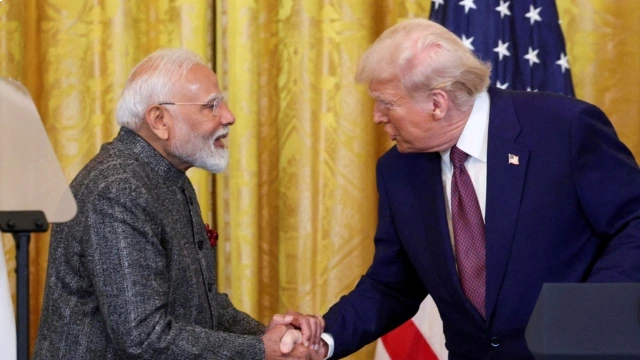
Trump confirmed that the United States would reduce tariffs on Indian goods to a uniform 18%, marking a significant de-escalation after months of trade pressure. In return, India agreed to a series of commitments that reshape the economic and strategic contours of the relationship.
According to Trump, Prime Minister Narendra Modi agreed to reduce Indian tariffs and non-tariff barriers on US goods to zero, opening domestic markets more fully to American exports.
Most notably, Trump stated that Prime Minister Narendra Modi had agreed to phase out purchases of Russian crude oil, a move aligned with Washington’s broader effort to isolate Moscow economically. At the same time, India committed to purchasing approximately $500 billion worth of US energy and technology products over the coming years.
The agreement, as outlined by Trump, combines trade liberalisation with strategic realignment linking tariff relief to energy sourcing and long-term procurement commitments.
In isolation, an 18% tariff may not appear transformative. In practice, it materially alters competitiveness.
Global trade decisions are often driven by narrow cost margins. For Indian exporters competing with suppliers in Vietnam, Bangladesh and other low-cost hubs, tariff differences of even a few percentage points can determine whether contracts are won or lost. A flat 18% rate narrows those gaps and, in several categories, restores India’s price competitiveness in the US market.
This is not a consumption-driven stimulus. It is a targeted recalibration favouring export-led industries.
The most immediate gains accrue to labour-intensive and tariff-sensitive sectors.
Textiles and apparel stand out as the primary beneficiaries. The US remains a key destination for Indian garments and home textiles, yet Indian exporters have steadily lost market share due to unfavourable tariff structures. Lower duties improve price parity and could revive order flows across manufacturing clusters that have faced prolonged stress.
Advertisement
Gems and jewellery also gain meaningfully. With thin margins and high dependence on US demand, even modest tariff reductions translate directly into improved volumes and profitability, particularly for diamond processing and gold jewellery exporters.
Engineering goods and auto components represent a more structural win. As US manufacturers diversify supply chains away from China, tariff rationalisation strengthens India’s case as an alternative sourcing base. The impact here is likely to be gradual but durable.
Pharmaceuticals and chemicals benefit in a different way. India already enjoys scale advantages in generics and specialty chemicals. Lower tariffs reinforce this position at a time when supply security and supplier diversification are increasingly important to US buyers.
The energy component of the deal adds a geopolitical layer. India’s agreement to reduce Russian oil purchases marks a significant shift, given its reliance on discounted crude since the Ukraine conflict began. Increased imports of US energy including oil, gas and related technologies deepen economic ties while aligning India more closely with US strategic priorities.
For Washington, the deal achieves multiple objectives: supporting domestic energy exports, countering Russian influence, and strengthening a key Indo-Pacific partnership.
For New Delhi, the trade-off is clear improved market access and tariff relief in exchange for energy diversification and long-term procurement commitments.
Not all sectors benefit equally. IT services, domestic consumption-driven industries and energy refiners see limited direct impact from tariff changes. Their performance depends more on demand cycles, regulation and commodity prices than on trade duties.
This underscores the nature of the agreement: it is not a blanket growth trigger, but a focused export and strategy-driven reset.
Taken together, Trump’s India Gate post and the subsequent announcements reflect a familiar pattern. Symbolism opens the door; leverage defines the terms.
The success of the agreement will ultimately depend on execution — whether Indian exporters translate tariff relief into sustained market share gains, and whether the promised energy and technology purchases materialise as planned.
An 18% tariff does not guarantee dominance. But paired with strategic concessions and long-term commitments, it marks a decisive shift from confrontation to conditional cooperation.
In global trade, that shift often matters more than the monument that announced it.
Advertisement