Indian Markets Rally After India–US Trade Deal: Sensex, Nifty Soar, Rupee Strengthens
by Vinay Kakkad · KalingaTVAdvertisement
Indian equity markets staged a powerful rally on Tuesday after the announcement of a landmark India–US trade agreement lifted investor confidence and eased months of trade-related uncertainty. Benchmark indices surged in early trade as investors moved quickly to price in improved export competitiveness, stronger foreign capital flows, and reduced geopolitical risk.
The rally followed confirmation by US President Donald Trump that Washington would cut tariffs on Indian goods to a uniform 18 percent, a sharp reduction from the elevated levels imposed last year. The announcement came after discussions with Prime Minister Narendra Modi, and was accompanied by a broader package of trade, energy, and strategic commitments.
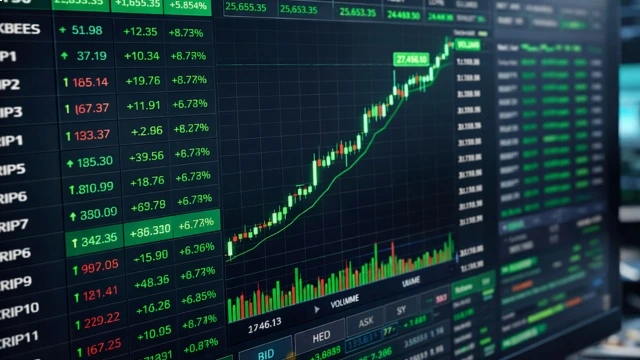
The BSE Sensex jumped as much as 3,600 points at the opening bell before paring some gains, while the Nifty 50 climbed close to 5 percent at its peak, marking one of the strongest single-session rallies in recent months. In mid-session trade, the Sensex was up more than 2,300 points, or about 2.8 percent, trading near the 83,900 level, while the Nifty hovered above 25,800.
Market sentiment was further supported by strength in the currency. The Indian rupee rose more than 1 percent against the US dollar, trading around ₹90.35, its sharpest single-day gain in several months, as expectations of renewed foreign institutional inflows lifted demand for domestic assets. In offshore non-deliverable forward markets, the rupee signalled an even stronger opening, reflecting aggressive positioning by global investors.
The trade deal went beyond tariff reductions. According to statements made by Trump, India agreed to reduce tariff and non-tariff barriers to zero on US goods, significantly opening its domestic market to American exports. India also committed to purchasing around $500 billion worth of US energy and technology products over the coming years and agreed to phase out purchases of Russian crude oil, adding a clear geopolitical dimension to the economic pact.
Advertisement
Investors responded by bidding up export-oriented stocks, particularly in sectors where pricing competitiveness is highly sensitive to tariff changes. Textiles, garments, auto components, engineering goods, and chemicals saw strong buying interest as the tariff rollback improved earnings visibility from the US market. Several export-linked midcap stocks touched fresh 52-week highs, underscoring the breadth of the rally.
Bond markets also reflected the shift in sentiment. The benchmark 10-year government bond yield eased by around 5 basis points to near 6.72 percent as investors rotated towards risk assets and priced in improved macro stability. Analysts said the combination of trade clarity, currency strength, and easing geopolitical risk reduced the risk premium attached to Indian assets.
Market participants noted that the rally was driven less by short-term sentiment and more by a reassessment of medium-term fundamentals. The 18 percent tariff cut removed a key overhang on Indian exporters at a time when global supply chains are being reconfigured away from China. At the same time, large-scale US energy and technology purchases improved visibility on bilateral trade volumes and capital flows.
Foreign institutional investors, who had been net sellers of Indian equities for much of last year amid trade tensions and global volatility, were seen returning to the market following the announcement. Strategists said policy certainty and clearer trade rules were critical triggers for reversing recent outflows.
Some caution remains. Analysts pointed out that several elements of the agreement will depend on execution timelines and formal implementation, and that the $500 billion procurement commitment will be spread over multiple years rather than materialising immediately. Energy diversification away from Russia could also carry short-term cost implications.
Even so, Tuesday’s rally reflected a decisive shift in market perception. For investors, the deal signalled a move away from confrontation towards conditional cooperation between two of the world’s largest economies. The strength of the response on Dalal Street suggested that markets were quick to reward clarity, scale, and strategic alignment, even as they await the finer details of implementation.
Advertisement